

Buying Guide
Pick Your Eco Angle First
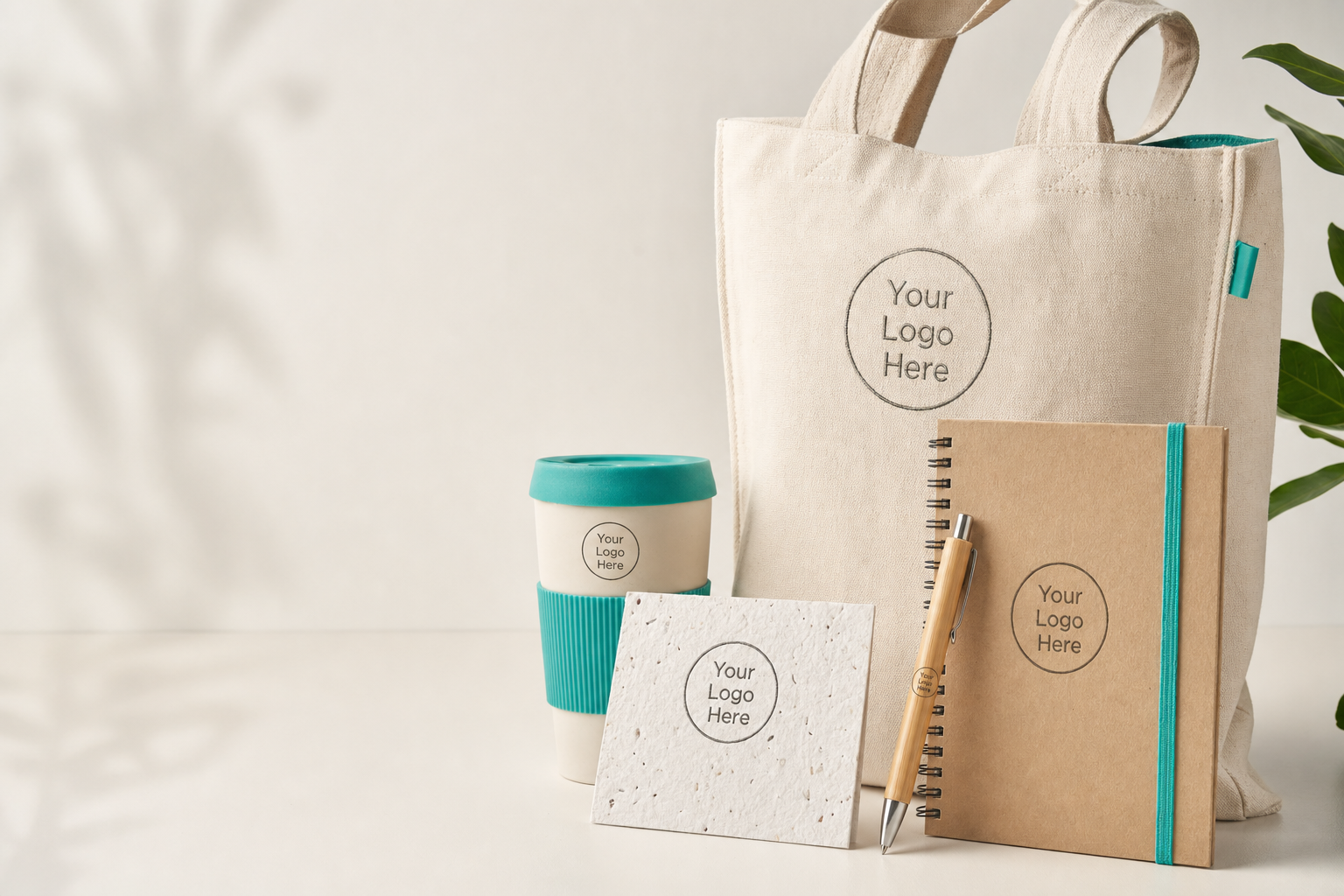
Start with recycled vs natural materials, then choose the product type (bags, pens, jotters, seeds) to suit the moment of use. Are you looking for a particular material such as wood, bamboo or recycled plastics or paper.
Why start with the material, not the product
Orient the reader to the main strategic question: whether to begin by choosing recycled vs natural materials before selecting a product type.
Choosing the material first clarifies what “eco” means for your brand and campaign. Different materials make different demands on decoration, perceived value and end-of-life options — so start here to avoid costly mismatches later.
- Decide whether your priority is recycling, biodegradability, low carbon, animal-friendly or a visible recycled aesthetic.
- Let that eco-angle guide product families (bags, pens, jotters, seed cards) rather than the other way around.
- Confirm practicalities — printing compatibility, durability and disposal routes — with suppliers before finalising a product.

Key decision criteria to compare
Explain the practical questions and trade-offs to weigh when choosing materials and products.
Use a short checklist to compare options. These criteria help balance sustainability goals with brand needs and user experience.
- Material source: recycled content versus naturally sourced (wood, bamboo, cotton, paper).
- End-use and durability: will the item be used daily, once at an event, or planted/disposed of?
- Decoration and branding: which materials take printing, engraving or embossing well?
- End-of-life: is the item recyclable, compostable or reusable in practice?
- Perceived quality and brand fit: how should the gift reflect your organisation’s values?
- Animal-friendly considerations: avoid animal-derived materials if vegan/animal-friendly values are important.
- Practical constraints: budget envelope, minimum order quantities and lead-times — confirm with suppliers.

Realistic options and their trade-offs
Help the reader compare common material categories and how they affect product choice for bags, pens, jotters and seeds.
Below are practical summaries of typical material groups and the trade-offs you will encounter.
- Recycled plastics (e.g. rPET):
- Pros: robust, good for reusable bags and durable items; well suited to certain printing techniques.
- Cons: recycling routes vary by area; not biodegradable — check local recycling capabilities and supplier traceability.
- Recycled paper and card:
- Pros: good visible recycled look for jotters, seed card packaging and flyers; often lightweight and recyclable.
- Cons: durability and water resistance are lower; decoration options may be limited compared with coated substrates.
- Natural fibres (cotton, hemp, linen):
- Pros: perceived as natural and tactile, suitable for bags and soft goods; can be long-lasting if well made.
- Cons: conventional cotton has environmental impacts; organic or recycled variants are preferable where relevant.
- Wood and bamboo:
- Pros: authoritative, premium feel for pens, desk items and packaging; good for perceived sustainability.
- Cons: decoration methods differ (engraving vs print); verify sourcing and finish (e.g. glues or lacquers) if animal-friendly credentials matter.
- Seed paper and plantable items:
- Pros: strong storytelling for environmental campaigns and outdoor events.
- Cons: needs the right user behaviour and soil conditions to work well; packaging and instructions are important to avoid disappointment.
These are typical trade-offs. Always confirm precise material composition, decoration compatibility and disposal guidance with your supplier.

Practical guidance to match product to moment of use
Give actionable advice on which product types suit different campaign moments and how to shortlist options practically.
Match product choice to how and when recipients will use the item. This reduces waste and improves impact.
- Events and conferences: choose sturdy reusable bags or tote bags — they have longevity and high visibility.
- Desks and daily use: select pens, jotters or wooden desk items that can live on a desk for months and reinforce your brand.
- One-off campaigns or direct mail: recycled paper items or seed cards create a clear eco message but ensure they survive postal handling.
- Outdoor or environmental activations: seed packs, plantable pencils or biodegradable items can work well — include clear planting instructions.
- Animal-friendly priorities: avoid leather, suede or animal-derived glues, and ask suppliers about finishes and adhesives.
Shortlisting checklist to use with suppliers:
- Ask for exact material composition and any recycled content percentages.
- Request a plain and branded sample to check feel, decoration quality and usability.
- Confirm end-of-life guidance (recyclable curbside, industrial composting, reusability) rather than assuming.
- Discuss decoration methods and colour fidelity on the chosen substrate.
- Clarify ethical considerations: supply origin, worker standards and any animal-derived components if relevant.
Common mistakes and questions to avoid
Address typical misunderstandings and frequent supplier questions so the buyer can make informed choices and avoid greenwashing traps.
Buyers often make predictable errors that reduce impact or cause delays. Being aware of these saves time and protects brand reputation.
- Assuming ‘eco’ is one-size-fits-all: different materials solve different problems — match the material to the use-case.
- Overlooking decoration limits: a material may be sustainable but unsuitable for your logo treatment — test early.
- Confusing recycled with recyclable: recycled content and recyclability are separate attributes — ask suppliers to clarify.
- Relying on vague claims: request clear data, sample evidence and documented end-of-life instructions rather than marketing phrases.
- Picking the cheapest option by default: low-cost items often end up unused or discarded quickly; durability and usefulness matter.
If you’re unsure about a supplier’s statements, ask for material data sheets, samples and references from other clients.
A clear next step: get focused and test
Provide a concise, practical next step the reader can take to move from decision to action with confidence.
Follow this simple sequence to make a confident choice without getting overwhelmed.
- Narrow your eco-angle: pick recycled content, natural/biodegradable, or animal-friendly as your primary objective.
- Select 2–3 product types that match the moment of use (e.g. tote bag + jotter for onboarding; pen + seed card for events).
- Request unbranded and branded samples and a short supplier response to the checklist in this guide (composition, decoration, end-of-life, sourcing).
- Compare samples with your stakeholders (HR, procurement, sustainability lead, creative) and decide which option best balances impact, brand fit and practicality.
If you’d like help, prepare your brief with the shortlisted eco-angle and product types, then ask suppliers for samples and a concise technical response. That evidence-led approach makes supplier comparisons straightforward and reduces the risk of poor outcomes.
Where would you like to go next?
Take your time. You can explore suitable products, keep learning, or ask our team for a second opinion.
A small selection to help turn “Pick Your Eco Angle First” into practical choices.