

Buying Guide
Drinkware
Drinking products that represent both your brand, your message and your integrity. You can be as eco conscious as you like with a range of recycled drinking products. Products that retain usefulness are always a good bet. Mugs at a meeting reinforce the awareness of your brand.
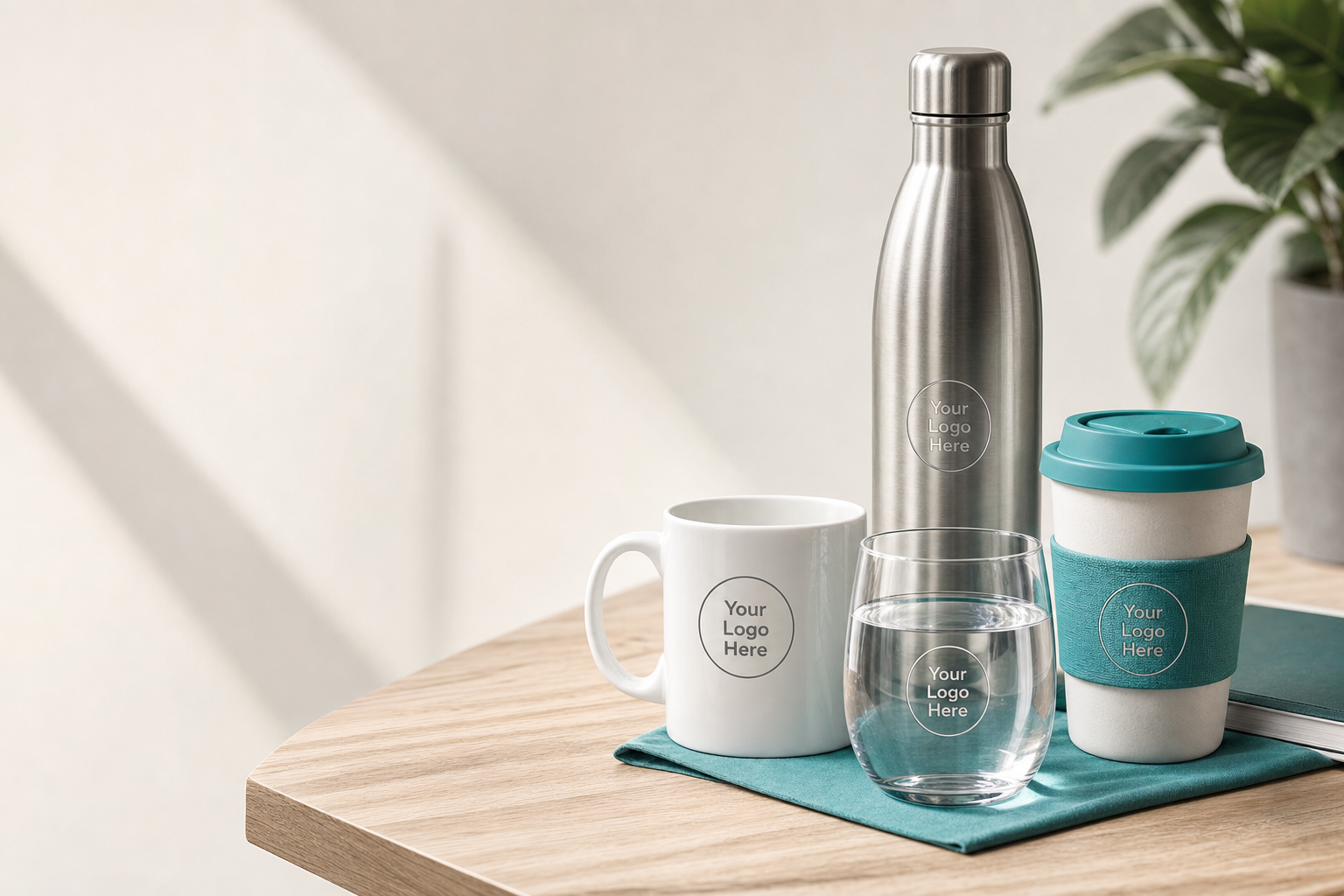
Why branded drinkware still works
Orient the reader to when and why drinkware is an effective promotional choice.
Branded drinkware remains a practical and visible way to put your logo into daily use. Whether for meetings, events, staff welcome packs or festivals, a well‑chosen mug, bottle or travel cup keeps your brand in circulation long after the first impression.
Decisions are usually driven by the intended context (office desk, outdoor event, on‑the‑go), how long you want the product to last, and whether sustainability is a priority. This guide helps you weigh those factors so you can make a confident, fit‑for‑purpose choice.
Key decision criteria
Explain the main questions to answer before selecting a product.
Before shortlisting products, clarify the practical and brand requirements. The core criteria to consider are:
- Intended use: Will it sit on desks, be carried on the move, or handed out at one‑day events?
- Audience: Clients, staff, volunteers or festival goers each have different expectations for quality and durability.
- Material and durability: Ceramic, glass, stainless steel, recycled plastic, bamboo and silicone behave differently in use and care.
- Insulation and capacity: Do you need a thermal bottle, an open tumbler, or a small espresso mug?
- Branding area and print method: Some shapes limit print placement; different materials suit pad‑print, screen‑print, full‑colour transfer or engraving.
- Sustainability: Recycled content, recyclability and end‑of‑life options vary—check claims with your supplier.
- Practicalities: Washing instructions, weight, lid types and how the product will be distributed or packed.
Realistic options and trade‑offs
Compare common product types and the practical compromises you’ll encounter.
Each category of drinkware offers clear benefits and compromises. Choose according to priority—cost, longevity, brand visibility or sustainability.
- Ceramic mugs: Classic and well‑received for offices and meetings. Pros: great print area for logos, perceived value. Trade‑offs: heavier and more fragile than other options.
- Glass tumblers: Sleek and premium for events or hospitality. Pros: premium look and clear printing on some finishes. Trade‑offs: fragile and less suited to outdoor or travel use.
- Stainless steel bottles and flasks: Durable and perceived as high value. Pros: long reuse potential, good for outdoor/events. Trade‑offs: shape limits some print methods; insulation options vary—confirm details with your supplier.
- Reusable takeaway cups and travel mugs: Practical for commuter audiences. Pros: portable and often stackable. Trade‑offs: lids, seals and dishwasher compatibility differ—test before ordering.
- Recycled plastic bottles and cups: Strong sustainability story if genuine recycled content is used. Pros: lighter and often cost‑effective. Trade‑offs: finish and print quality can vary; verify claims and recycling instructions.
- Bamboo/wood‑fibre composites: Natural aesthetic and a differentiator for eco messaging. Trade‑offs: not always dishwasher safe and print reproduction can be muted on textured surfaces.
- Collapsible silicone cups: Space‑saving for events and travel. Trade‑offs: feel and perceived value are different to rigid alternatives; printing options are limited.
When in doubt, ask suppliers for samples and mock‑ups to evaluate look, feel and print reproduction on the chosen material.
Practical selection steps
Give a clear step‑by‑step approach to choose and brief drinkware correctly.
Follow these practical steps to narrow choices and prepare an effective brief for suppliers:
- Define the use case and audience: Note where items will be used and who will receive them.
- Shortlist materials: Pick two or three material types that match your use case and brand tone.
- Consider branding needs: Prepare logo files (vector preferred) and note ideal placement and any colour matching requirements (Pantone if relevant).
- Request physical samples: Always ask to see and feel a sample before approving a large order; samples show true colour, print quality and lid fit.
- Check sustainability claims: Ask suppliers for evidence or details of recycled content and end‑of‑life options and confirm any claims you plan to make to customers.
- Confirm production details: Ask for print proofs, production lead times, minimums, packaging options and shipping—confirm these directly with your supplier.
- Plan for aftercare: Consider labelling for washing instructions and any spare parts (e.g. replacement lids) if relevant.
These steps reduce surprises and ensure the final product aligns with both brand expectations and practical use.
Common mistakes and FAQs
Highlight typical pitfalls and provide short answers to frequent questions.
Organisations often make avoidable choices when selecting drinkware. Watch for these common mistakes:
- Choosing solely on price: Very cheap items can damage brand perception and have higher waste or replacement rates.
- Not testing artwork: Small logos or fine detail may not reproduce well on textured or curved surfaces.
- Ignoring user experience: Lid fit, spout design and weight affect whether recipients actually use the item.
- Assuming all 'eco' options are equivalent: Recycled content, recyclability and biodegradability are different—ask for specifics.
- Skipping samples: Photos rarely show tactile quality, print fidelity or lid sealing performance.
Brief answers to frequent questions:
- What’s best for giveaways at festivals? Lightweight, durable and low‑break options like recycled bottles or insulated bottles for outdoor events.
- What’s best for client gifts? Higher perceived value items such as ceramic mugs or stainless bottles, with premium packaging if relevant.
- How to balance budget and quality? Decide whether you want one high‑value item or a larger number of functional items—both approaches have merit.
Always confirm technical details, certification or safety information with your supplier before making claims to customers or staff.
Helpful next step: prepare a short brief
Provide an immediate, low‑effort action to move from planning to quotations and samples.
To get meaningful quotes and samples, prepare a concise brief with the following information:
- Project purpose and target audience (e.g. staff welcome packs, festival giveaways).
- Estimated quantity range (a ballpark is sufficient to start).
- Preferred product types or materials (two or three options is fine).
- Branding details: logo files (vector PDF/AI/SVG if available), required print area, and colour references (Pantone if important).
- Sustainability preferences or constraints, and any packaging requirements.
- Desired delivery window or event date (note this will need confirming with suppliers).
With that brief you can request samples, mock‑ups and an informal quote. If you’d like help turning this into a supplier brief or shortlisting options, get in touch with us for a consultation and sample pack—we’ll guide the next steps and help you avoid common pitfalls.