

Campaign Guide
What does CSR mean to you
CSR (Corporate Social Responsibility) is important if you want your company to be viewed as a caring, forward thinking organisation. In some cases, it's an essential requirement for purchasing terms.

Campaign proposition
Helps the reader clarify the core campaign question: what is the campaign aiming to communicate about the organisation’s CSR intent and how should merchandise support that message?
This campaign positions promotional merchandise as a practical expression of your corporate social responsibility — not merely as branded kit but as an extension of values and procurement policy. The aim is to communicate care, transparency and long-term thinking through choices that stakeholders can see and appreciate.
Typical campaign objectives you might choose from:
- Demonstrate alignment with company CSR commitments to customers and partners.
- Support employee engagement and welcome new starters with sustainable onboarding packs.
- Meet procurement or tender requirements by showing careful supplier selection and traceable materials.
Decide one primary objective before you brief suppliers so all creative and purchasing decisions support a single measurable outcome.

Audience and timing
Guides selection of target audiences and the moments that make CSR-led merchandise most meaningful.
Identify who should receive the items and why. Typical primary audiences include procurement teams, HR for employee programmes, and marketing for client-facing activity. Secondary audiences can include event attendees, new clients or community partners.
Consider timing around internal and external moments rather than fixed dates: CSR reporting cycles, employee onboarding schedules, product launches, or themed campaigns such as sustainability weeks. Aligning with these touchpoints increases relevance.
- Segment recipients by role and relationship to your CSR goals (e.g. employees vs clients).
- Choose delivery timing that reinforces the message (welcome packs on day one, event give-aways tied to a sustainability session).
- Coordinate with procurement cycles to avoid conflicts with buying approvals.

Why it matters
Explains the value decisions to be made: why a CSR-focused merchandise approach is strategically useful for reputation, compliance and engagement.
Merchandise that reflects CSR principles can support reputation, demonstrate procurement rigour and improve employee morale. It signals that sustainability is practised, not just stated — provided choices are genuine and verifiable.
Key considerations when evaluating the campaign’s value:
- Relevance: Will the items reinforce a message your audience already values?
- Credibility: Can suppliers provide transparent supply-chain information and material provenance?
- Measurability: What outcomes will you track — staff engagement, stakeholder feedback, procurement compliance?
Be cautious of greenwash: any sustainability or ethical claims should be backed by documentation from your supplier. If in doubt, ask for supporting evidence and allow time for verification.

Practical creative and product ideas
Offers practical, non-prescriptive product directions and creative approaches that reflect CSR priorities without sounding like a product brochure.
Choose product directions that align with your CSR priorities (e.g. waste reduction, circular design, social value). Below are idea categories and how to think about them.
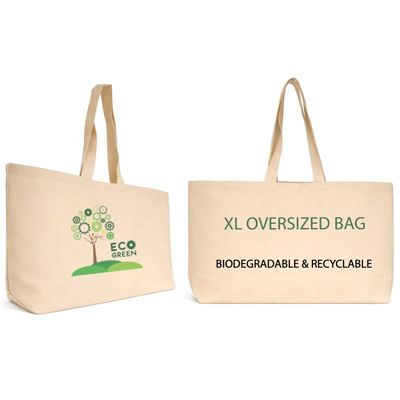
- Onboarding and employee kits — durable, useful items that reduce single-use habits (reusable bottles, high-quality stationery, a durable tote). Consider lifetime usefulness over trend-led items.
- Client appreciation gifts — experiences or items that support local suppliers or charities, such as locally made goods or donations in the recipient’s name. Ensure transparency about provenance.
- Event and conference items — practical items tied to the event’s purpose, distributed in minimal, compostable or reusable packaging to reduce waste.
- Cause-linked merchandise — items where part of the spend supports a clear charitable outcome. Confirm how any donation is delivered and reported.
- Branded essentials with traceability — choose materials that are recycled, repairable or certified under recognised schemes; ask suppliers for evidence of material origin and end-of-life options.
When developing creative, prioritise simple messages and honest labelling. Avoid overstating environmental or social impact without documentation — check claims with your procurement or sustainability lead.
Planning guidance
Helps the reader plan the campaign in practical steps: stakeholder sign-offs, supplier checks and measurable outcomes to avoid last-minute compromises.
A clear planning process protects your CSR intent and ensures procurement and brand teams are aligned. Use a short, focused brief and a simple approval pathway.
- Define objectives and success metrics up front (e.g. engagement, compliance evidence, reduced waste).
- Set sustainability criteria for suppliers — transparency, materials, packaging and end-of-life considerations — and request evidence rather than taking claims at face value.
- Shortlist suppliers and request samples or prototypes so you can assess quality and labels in person.
- Allow time for internal approvals from procurement, legal and sustainability teams; confirm any procurement thresholds that require competitive tendering.
- Plan communications that explain the choices you made: why this item, what materials were used, and how it ties to broader CSR work.
Note: lead times, minimum quantities and certification specifics vary by supplier. Confirm these details directly with prospective providers before finalising the plan.
Next step — a clear call to action
Provides a concise, practical next step so the marketing lead can move from strategy to action without ambiguity.
Take one focused action to get the campaign moving: draft a one-page brief that states the campaign objective, primary audience, two sustainability criteria, and preferred product type. Share this with your procurement and sustainability lead for quick feedback.
Suggested brief checklist:
- Campaign objective and target audience
- Two must-have sustainability criteria (e.g. recycled content, supplier transparency)
- Preferred product categories or examples
- Desired delivery window and any procurement constraints
When the brief is ready, arrange a short discovery call with your preferred supplier or account manager to review samples and confirm evidence for any sustainability claims. Confirm all operational details — lead times, minimums and certifications — directly with the supplier before placing an order.
Ready to shape your campaign?
Explore suitable products, continue planning, or ask our team to help turn the idea into a practical campaign.
A small selection to help turn “What does CSR mean to you” into practical choices.