

Campaign Guide
Sustainable Campaigns
To choose the right sustainable promotional merchandise, focus on long-term utility, responsible materials like organic cotton or recycled PET, and local UK sourcing. Select items people will actually use daily rather than cheap throwaways, ensuring your campaign reduces waste and accurately reflects your eco-friendly values
What this guide helps you decide
Clarify the core decision the reader needs to make: which sustainable promotional approach will best represent their brand and meet campaign goals.
This brief guide is for marketing and procurement teams who need a practical way to plan sustainable promotional merchandise without getting lost in technical detail. It focuses on decisions you can make now to increase utility, reduce waste and reflect your sustainability commitments.
Use it to:
- Define the campaign proposition and intended audience.
- Choose product directions that favour longevity and everyday use.
- Set simple planning steps to minimise waste and maximise impact.
Audience and timing: who to target and when
Help the reader decide which recipients and moments will make a sustainable campaign effective and appropriate.
Consider who will actually use the item and when it will be distributed. Typical audiences include new starters (HR), clients and prospects at conferences, employees as engagement tools, and sustainability-minded partners or customers.
Timing is about relevance rather than calendar dates: align distribution with moments that increase utility and meaning, such as onboarding, product launches, sustainability reporting cycles or industry events.
- Prioritise daily-use items for high retention and repeated brand visibility.
- Match item style and messaging to the audience (employee gifts can be more functional; client gifts may be more considered and premium-feeling).
- Plan distribution to avoid excess stock and unnecessary shipping—coordinate with events or internal roll-outs.
Why sustainable merchandise matters for your brand
Explain the strategic benefits and the reputational considerations that influence the decision to invest in sustainable merchandise.
Well-chosen sustainable merchandise reinforces your brand values, reduces the risk of wasteful giveaways and can boost employee and customer goodwill. The real value comes from useful items that remain in use rather than single-use giveaways.
Be mindful of reputational risks: vague or overstated environmental claims can be perceived as greenwashing. Where sustainability is core to your message, prioritise transparency and verifiable supplier information.
- Focus on longevity and utility to get the best environmental and brand return on investment.
- Ask suppliers for clear information about materials, origin and end‑of‑life options—confirm details rather than assuming.
- Use modest, honest messaging that reflects what the items actually deliver.
Practical creative and product directions
Give concrete product categories and creative approaches that help the reader choose items aligned with sustainability and usability.
Choose categories that favour repeated use and easy end‑of‑life handling. Below are directions to consider rather than exact specifications—confirm material choices and claims with suppliers.
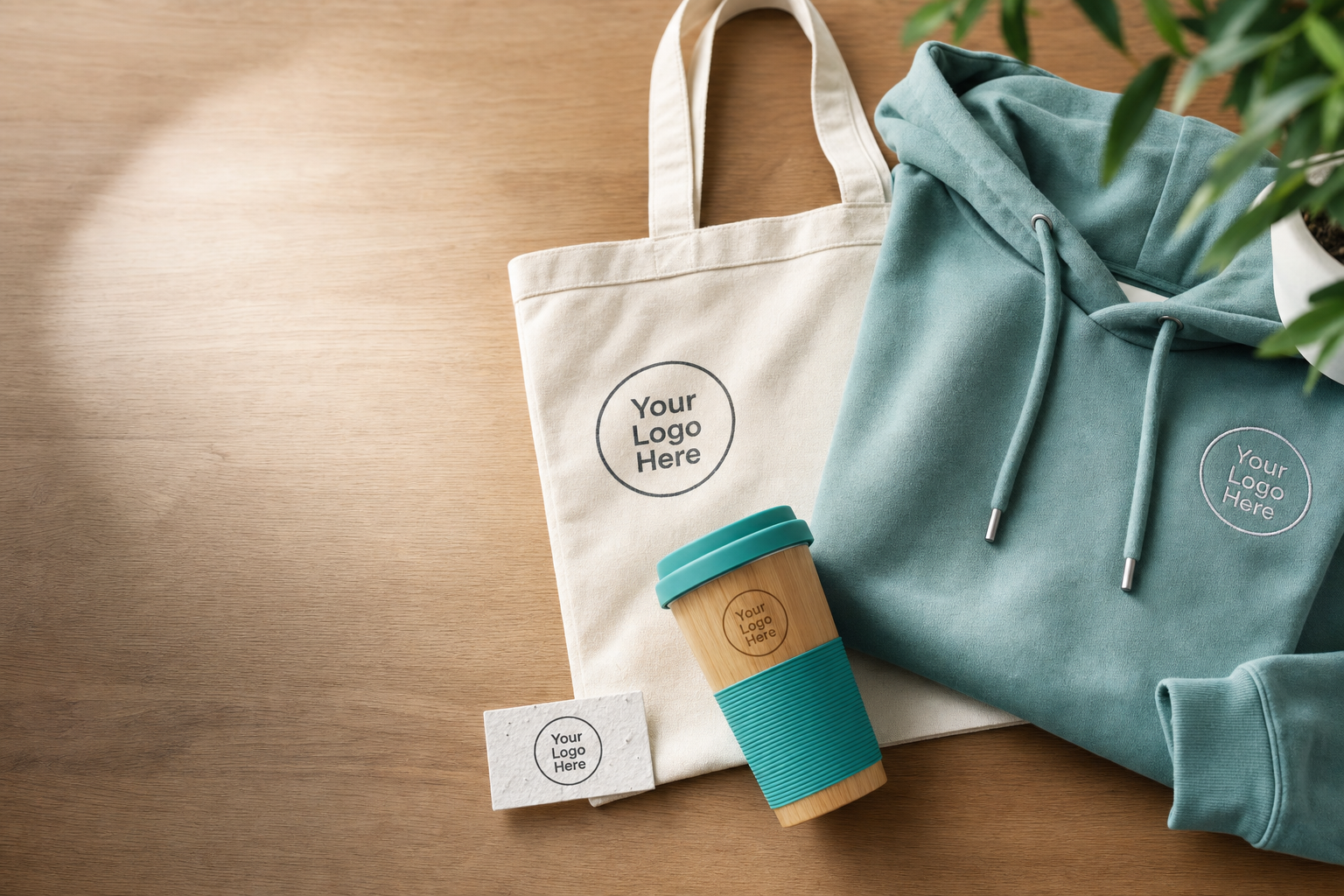
- Everyday carry: reusable water bottles, thermal mugs and sturdy tote bags that replace disposables.
- Wearables: classic, durable apparel designed for longevity—select styles that encourage regular use rather than fast-fashion trends.
- Desk and tech: practical items for the office such as refillable notebooks, recycled-material mouse mats or cable organisers that are likely to be used daily.
- Thoughtful touches: seed-paper note cards or plantable tags for an event, packaged with minimal waste to tell a sustainability story.
- Local and low-transport options: source items from UK suppliers where possible to reduce transport impacts and support local supply chains.
Creative approach: keep branding understated, aim for timeless design, and provide care or reuse guidance on labels to extend product life.
Planning guidance: from brief to distribution
Outline the project steps and decisions needed to move from idea to delivery while keeping sustainability objectives at the centre.
A straightforward planning process keeps sustainability practical. The checklist below will help you set clear criteria and avoid common pitfalls.
- Define objectives: What behaviour or perception are you trying to influence? Who is the priority audience?
- Set sustainability criteria: Prioritise durability, known material origins, end‑of‑life options and minimal packaging. Ask suppliers for supporting information and samples to validate claims.
- Design for longevity: Limit seasonal styling, use classic colours and consider modular or refillable solutions.
- Approve samples early: Review feel, print quality and labelling before committing to bulk orders.
- Logistics and distribution: Plan storage, staggered delivery and targeted distribution to avoid surplus stock.
- Measure and learn: Collect feedback from recipients and track usage where possible to inform future campaigns.
Note: always confirm material specifics, supplier provenance and any sustainability claims directly with your supplier—this guide provides decision guidance, not certification.
Next step: a simple, low‑risk way to move forward
Provide a clear, practical action the reader can take immediately to progress their campaign without committing to large purchases.
If you’re ready to explore options, start with a short discovery conversation to define goals, audience and a realistic shortlist of product directions. This keeps the project focused and avoids unnecessary upfront spend.
Immediate actions you can take today:
- Confirm the campaign objective and target audience internally.
- Gather a shortlist of 3–5 product directions from your team and ask shortlisted suppliers for sample options and material information.
- Set a simple sustainability checklist that items must meet (durability, clear material information, minimal packaging).
When you’re ready, contact our team to discuss your campaign objectives and product directions so we can help translate them into practical options and next steps.