

Campaign Guide
Exhibitions & Events
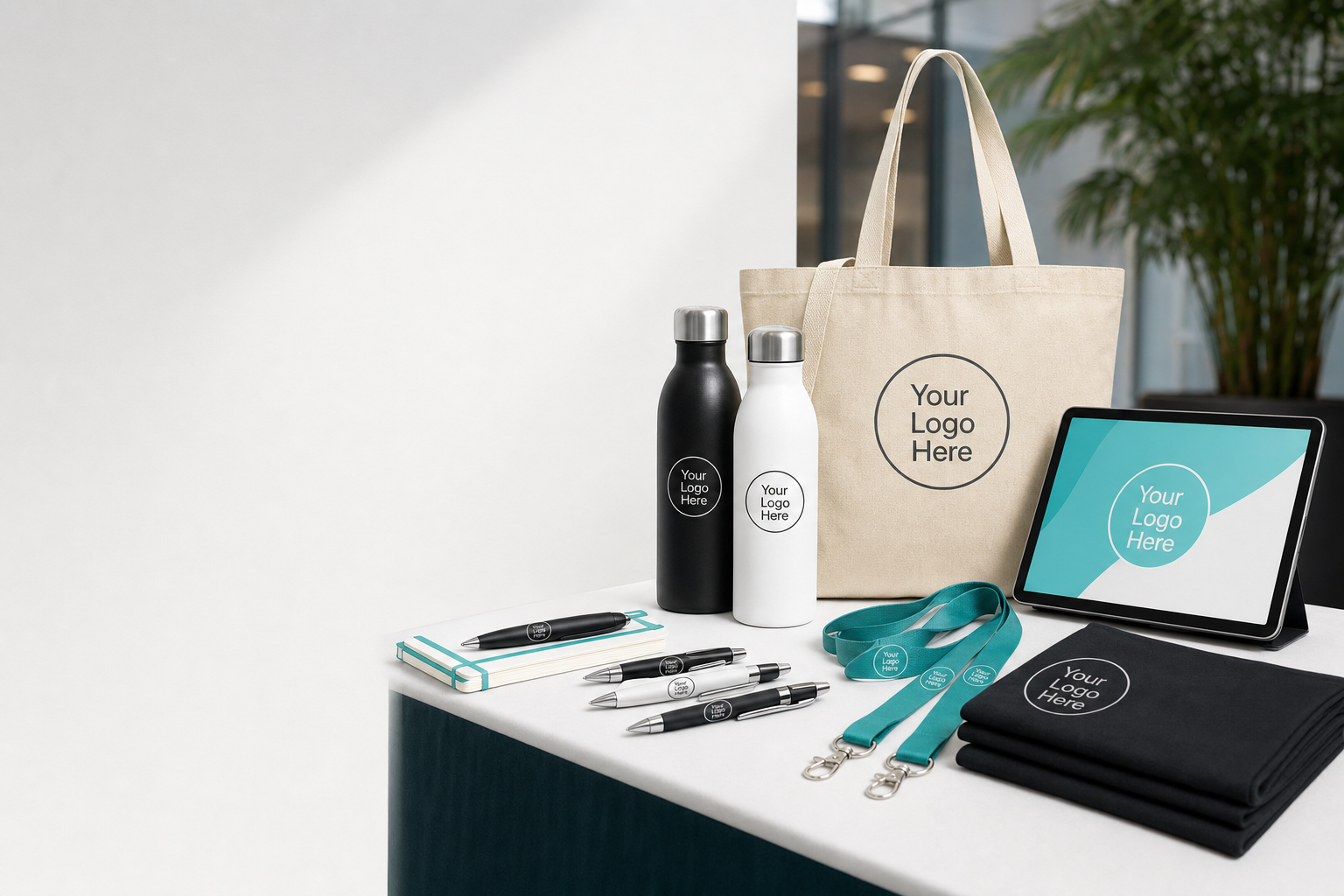
To choose the right promotional merchandise, pick items that match your audience, fit your budget, and feature your clear branding. Useful giveaways like pens, tote bags, and reusable water bottles work best because people keep and use them.
Campaign proposition: a simple, measurable objective
Helps decide what you want the merchandise to achieve so all later choices (item, message, quantity) support the same goal.
Start with one clear objective for your event merchandise: generate leads, increase brand recall, reward customers, or support sustainability messaging. A single focused goal keeps your brief concise and helps you measure success afterwards.
- Define the primary outcome you want from the giveaway (e.g. more qualified leads at follow-up, higher footfall at the stand, social shares).
- Choose one or two secondary aims only (brand awareness, useful long-term impressions).
- Agree on a simple success metric you can track (sample count distributed, badge scans, follow-up conversion rate).
Keep the proposition realistic and aligned with your broader event objectives so your merchandise provides tangible support rather than being an add-on.
Audience and timing: match item to people and schedule
Helps determine which items are appropriate by asking who will receive them and when they will be used.
Identify the core audience segments you will meet at the event and think about their needs and the context in which they’ll use the item.
- Consider attendee type: prospects, partners, existing customers, or general visitors — each group values different items.
- Think about when the item will be used: on-site (lanyards, flyers), during travel (tote bags, bottles), or long-term (notebooks, reusable items).
- Factor in the event schedule: if you need items for pre-event mailouts, allow extra time for production and delivery.
Answering these questions narrows product choices and guides the creative approach so you avoid over-ordering or choosing items that won’t be used.
Why it matters: influence, perception and durability
Explains the value of promotional merchandise for brand perception and how to choose items that deliver ongoing value.
Well-chosen merchandise is more than a freebie — it’s a tangible piece of your brand that can extend engagement beyond the event. Items that are frequently used or displayed keep your brand top of mind.
- Useful items are kept and used more, increasing impressions per item and improving ROI.
- Quality perception matters: an item that feels thoughtful reflects well on your brand, while poor-quality items can damage credibility.
- Sustainability is increasingly important for many audiences; consider durable or recyclable options when appropriate and confirm credentials with suppliers.
Make choices that support the message you want attendees to take away about your organisation — practical, premium, or purpose-driven.
Practical creative and product directions
Provides product ideas and creative angles suited to different objectives and audiences so you can shortlist possibilities efficiently.
Choose products that align with how and where they will be used. Below are common directions with quick notes on suitability.
- Everyday essentials — pens, notebooks, phone chargers: low-cost per impression, good for high-footfall events and lead capture stations.
- Transport and on-site use — tote bags, umbrellas, reusable water bottles: visible items that travel beyond the event and offer repeated exposure.
- Tech and desk accessories — branded mouse mats, power banks, cable organisers: perceived as useful and slightly higher value for targeted prospects.
- Wearables and badges — lanyards, caps, scarves: good for immediate visibility and brand unity on the stand.
- Eco-focused options — recycled materials, refillable bottles, seed-paper: useful if sustainability is part of your message; confirm material claims with suppliers.
- Experience-led items — sample packs, demo vouchers, interactive giveaways: drive engagement and create a reason to speak with a team member.
For creative execution, keep branding clear and simple. A short headline, legible logo and a call to action (website, QR code) are usually more effective than dense copy on small items.
Planning guidance: brief, approvals and logistics
Outlines the practical steps and decisions to manage production, artwork, approvals and distribution without committing to specific lead times or costs.
Create a simple production plan that covers brief, artwork, approvals, ordering and distribution. This reduces last-minute surprises and keeps the project on schedule.
- Prepare a concise brief: objective, audience, target quantity range, preferred materials, and any mandatory branding elements.
- Request mock-ups and, where possible, a physical sample before final approval. Samples reduce the risk of unexpected print or material issues.
- Allow time for artwork rounds and internal approvals; include the printer/supplier in discussions about print constraints and placement.
- Plan distribution: storage at the venue, booth staffing for collection, or pre-event fulfilment for VIPs. Make a contingency plan for shortfalls or delays.
- Confirm sustainability or material claims directly with your supplier and ask for supporting information if you intend to use these claims publicly.
Always finalise details — artwork files, quantities and delivery instructions — in writing and check the supplier’s process for proofs and changes.
Next step: a short checklist and contact prompt
Gives a practical immediate action plan so marketing teams can move from idea to order with clarity and confidence.
When you’re ready to proceed, follow this short checklist to keep momentum and reduce risk:
- Define your primary objective and target audience for the merchandise.
- Shortlist three product directions that match that audience and objective.
- Draft a brief with required branding elements and a provisional quantity range.
- Request samples and mock-ups from chosen suppliers and confirm any sustainability information you need.
- Agree proof, approval and delivery milestones before committing to the final order.
If you’d like help turning this into a brief or reviewing product options, contact our team with your objective and audience details. We can suggest suitable directions, request samples and produce a concise supplier brief to keep the process simple and effective.