

Campaign Guide
Employee Welcome
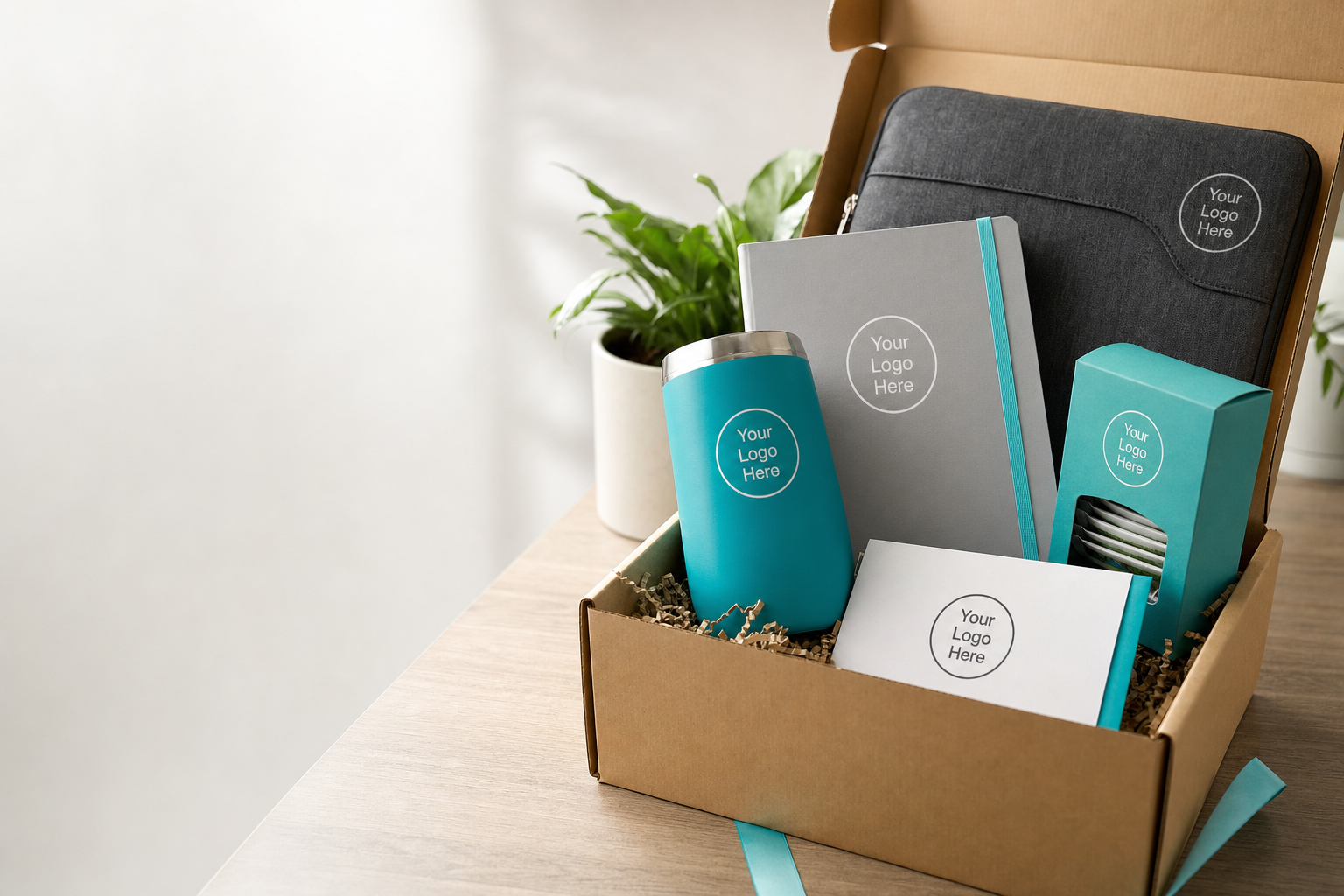
Choosing the right promotional merchandise for an employee welcome involves balancing practical daily utility with a gifed item. Focus on high-retention items like insulated drinkware, quality notebooks, laptop sleeves, tea-bags and a personalized welcome card rather than cluttering kits with low-value trinkets. If the on-boarding merchandise is presented in a gift box, it really gives a thoughtful impression of a gift rather than something too practical.
What this campaign aims to achieve
Answers: What should an employee welcome merchandise campaign deliver and which decisions should I make first?
This campaign is about creating a memorable, useful first impression for new starters. The core aim is to combine one or two practical, high-retention items with something that feels gifted and personal, presented in a tidy package that reflects your employer brand.
Early decisions to make are straightforward: who is the recipient, what budget band you have in mind, and whether the package should be uniform for everyone or tailored by role or location. Those choices will guide everything that follows.
Audience and timing — who gets what and when
Answers: Which internal audiences should receive welcome merchandise and when in the onboarding journey should items be sent?
Target audience typically covers new hires across departments, with variations for senior hires, contractors or remote staff. Consider whether you want a single standard kit or small variations by role (for example, sales versus engineering) to increase relevance.
- Timing options: send before a start date to create excitement, on the first day for a warm in-person welcome, or within the first week as part of onboarding activities.
- Remote hires may value items that arrive ready-to-use at home; in-office hires might appreciate a package delivered to their desk or presented on day one.
- Decide early whether items will be shipped centrally, sent individually, or handed out at an induction session — the fulfilment method affects cost and logistics.
Why this matters to your people and your brand
Answers: What outcomes does a welcome kit influence and why should HR, directors or managers care?
A considered welcome package is a small but powerful touchpoint in the employee experience. It can help new starters feel valued, understood and better connected to your culture from day one.
- Practical utility increases the chance an item is kept and used, reinforcing your brand in everyday moments.
- A personalised note or curated presentation conveys thoughtfulness without needing lavish spend.
- Consistent, on-brand merchandise supports internal communications and helps new employees feel part of the team.
Practical creative and product directions
Answers: What types of items typically work well and how should they be presented?
Prioritise quality over quantity. Choose a small number of items that are genuinely useful rather than many low-value trinkets.
- Insulated drinkware — popular because it’s used daily and visible in workplaces.
- Quality notebooks and a good pen — durable, professional and useful in meetings.
- Laptop sleeve or protective tech accessory — relevant for many modern roles.
- Tea bags, coffee sachets or a small locally sourced treat — a warm, approachable touch.
- Personalised welcome card — a short, handwritten or personalised printed message increases perceived care.
- Presentation — a neat gift box, tissue wrap or branded drawstring bag elevates the experience and distinguishes it from routine kit.
Branding choices: apply logos and colours thoughtfully. Subtle, tasteful branding often performs better than large, high-contrast prints for items intended for daily use.
Planning guidance — from idea to delivery
Answers: How do I manage supplier selection, approvals and fulfilment so the campaign runs smoothly?
Break the project into clear phases and assign owners for each stage: requirements, sourcing, sampling, approvals, ordering and fulfilment. This reduces the chance of last-minute issues.
- Define scope: recipient groups, quantities, and any role-based variations.
- Sourcing: shortlist suppliers and ask for samples before committing. Confirm branding options and proofing process.
- Approvals: include procurement, HR and brand/marketing in proof approvals to avoid rework.
- Logistics: decide on central fulfilment versus direct shipping and consider packaging sizes for mailing and storage.
- Compliance: check any internal gifting policies and confirm personal data handling for address fulfilment.
- Contingencies: build time for sample evaluation and expect to confirm lead times and minimums with suppliers — details should be verified with each provider.
Suggested high-level timeline: plan, shortlist and request samples → internal approvals and finalise artwork → place order → quality check on receipt → distribute. Tailor the timeline to your organisation’s procurement processes.
Clear next step
Answers: What practical action should I take now to move the campaign forward?
Start by compiling three simple items of information: an estimated headcount, the preferred timing for delivery and a rough budget band. Use those to shortlist two or three product directions from the ideas above.
- Request samples or mock-ups for your top selections so stakeholders can see and feel options.
- Circulate one example concept (image + item list + estimated fulfilment approach) to HR and brand owners for quick feedback.
- Confirm who will sign off on final artwork and the person responsible for distribution logistics.
If you’d like support, contact your account manager or supplier to discuss sample options and next steps. Remember to confirm lead times, minimum quantities and any certification or compliance details directly with the chosen supplier before placing an order.